

Blended Intensive Programme 2026 on Jewish Culture in the Central European Context
From 1 to 5 June 2026, Constantine the Philosopher University in Nitra hosted and coordinated, for the second time, the international Blended Intensive Programme (BIP) implemented within the framework of the Erasmus+ programme. The event was organized by the Institute of Central European Languages and Cultures of the Faculty of Central European Studies in close cooperation with the faculty leadership and the University’s International Relations Office.
The successful implementation of the programme reflects the university’s active involvement in the European Higher Education Area and its long-term commitment to developing high-quality and sustainable international partnerships. At the same time, the Blended Intensive Programme creates opportunities for strengthening academic cooperation, supporting the mobility of students and teachers, and exchanging professional knowledge among partner institutions.
This year’s programme, entitled The Jewish Cultural Phenomenon in the Central European Context, focused on expanding knowledge of Jewish culture, traditions, and identity in Central Europe. Through expert lectures, discussions, and accompanying activities, participants had the opportunity to gain a deeper understanding of the historical, social, and cultural aspects of Jewish heritage and its significance within the Central European context.
The aim of the educational programme was to introduce university students to Jewish culture as an integral part of the Central European region and to deepen their knowledge of its historical, religious, social, and artistic manifestations. Students from Czech and Polish universities had the opportunity to explore the cultural, historical, and social aspects of the Jewish community, reflect on them through literature, film, and art, and understand the significance of the Jewish presence in shaping the multicultural environment of Central Europe.
The BIP consisted of a virtual and an on-site component. The virtual part took place on 25 May 2026, during which the programme and its participants were introduced. This component served as a theoretical introduction to the fundamental aspects of Jewish culture, its traditions, and values, while also preparing participants for the subsequent on-site activities.
The on-site part of the BIP was held in Nitra from 1 to 5 June 2026 and included workshops and experiential activities aimed at developing knowledge of Jewish culture in its historical and social contexts. Fifteen students from the University of South Bohemia in České Budějovice, Palacký University Olomouc, the University of Warsaw, and the University of Bielsko-Biała participated in the project.
In addition to the students, distinguished guests included literary scholar Prof. PhDr. Libor Pavera, CSc., literary scholar and specialist in Czech studies Assoc. Prof. Erik Gilk, Ph.D., and Polish linguist and literary scholar Dr. Ilona Gwóźdź-Szewczenko. The Institute of Central European Languages and Cultures was also represented by the renowned Czech Slavist Prof. PhDr. Miloš Zelenka, DrSc.
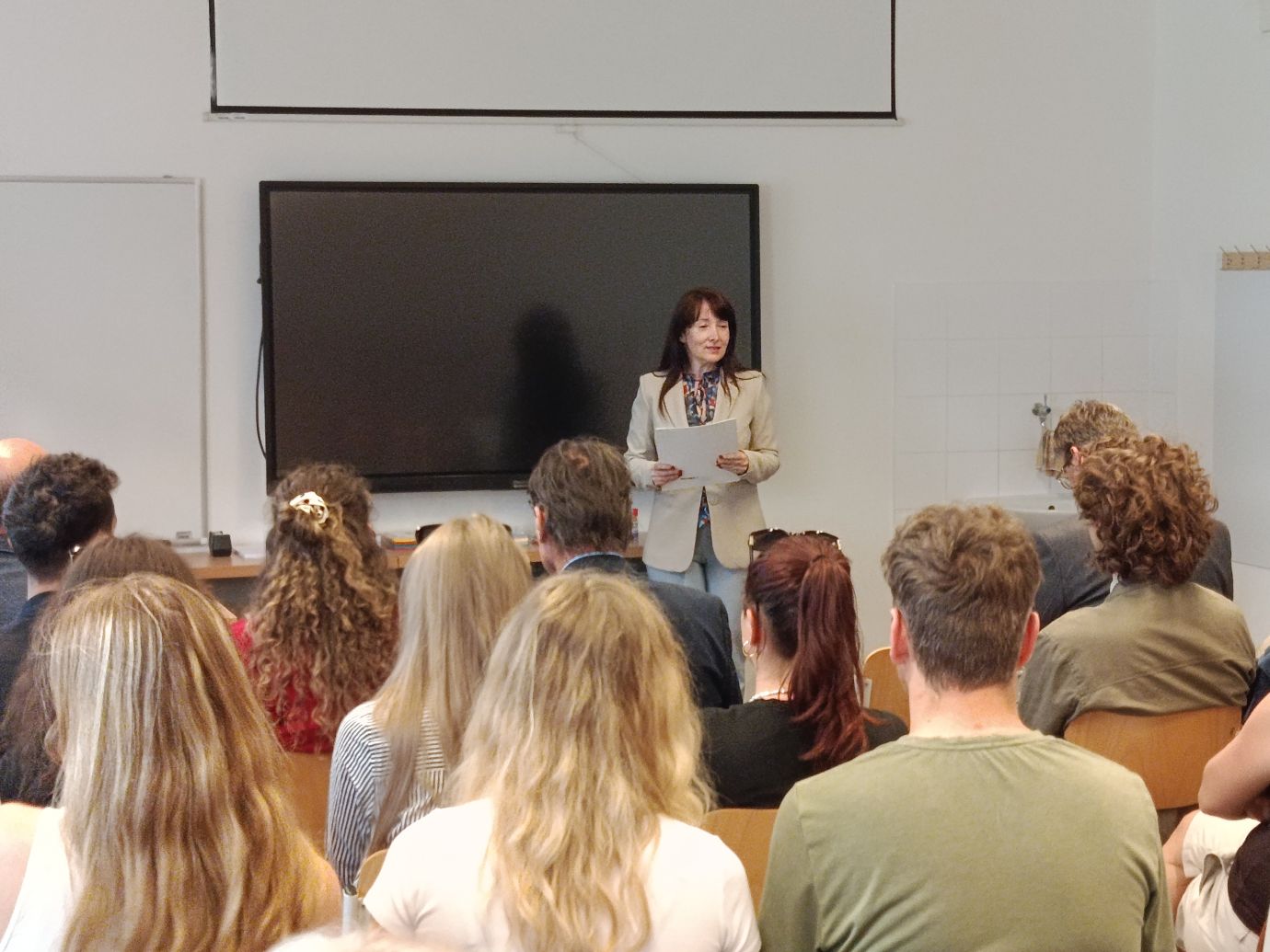
On Monday, 1 June, the on-site component of the BIP was officially opened in the presence of the Vice-Rector for International Relations, Assoc. Prof. Martina Pavlíková, PhD., MBA, the Dean of the Faculty of Central European Studies, RNDr. Ladislav Szekeres, PhD., the Vice-Dean for International Relations, Mgr. Viktória Gergelyová, PhD., and the Director of the Institute, Assoc. Prof. PhDr. Ján Gallik, PhD.
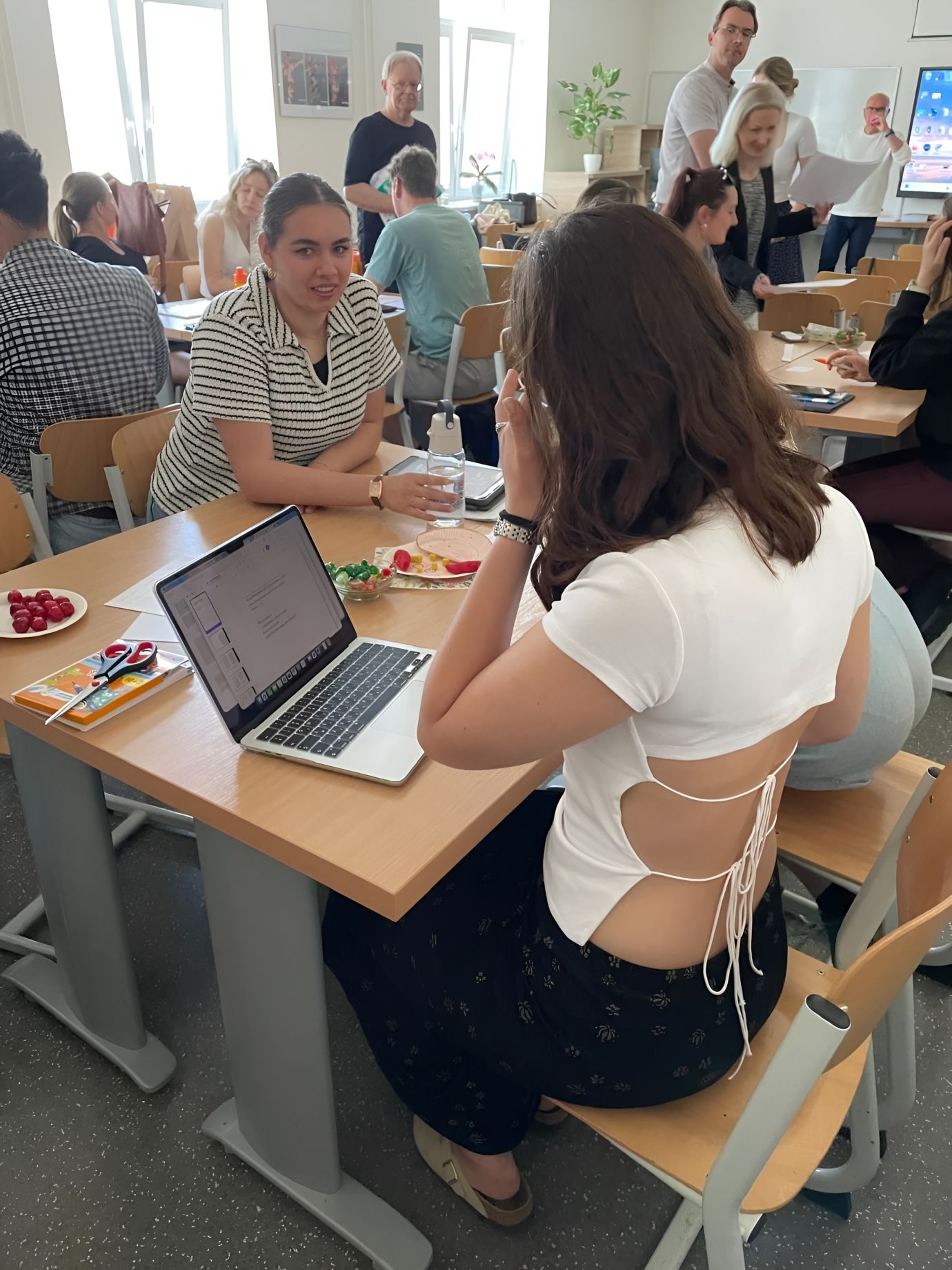
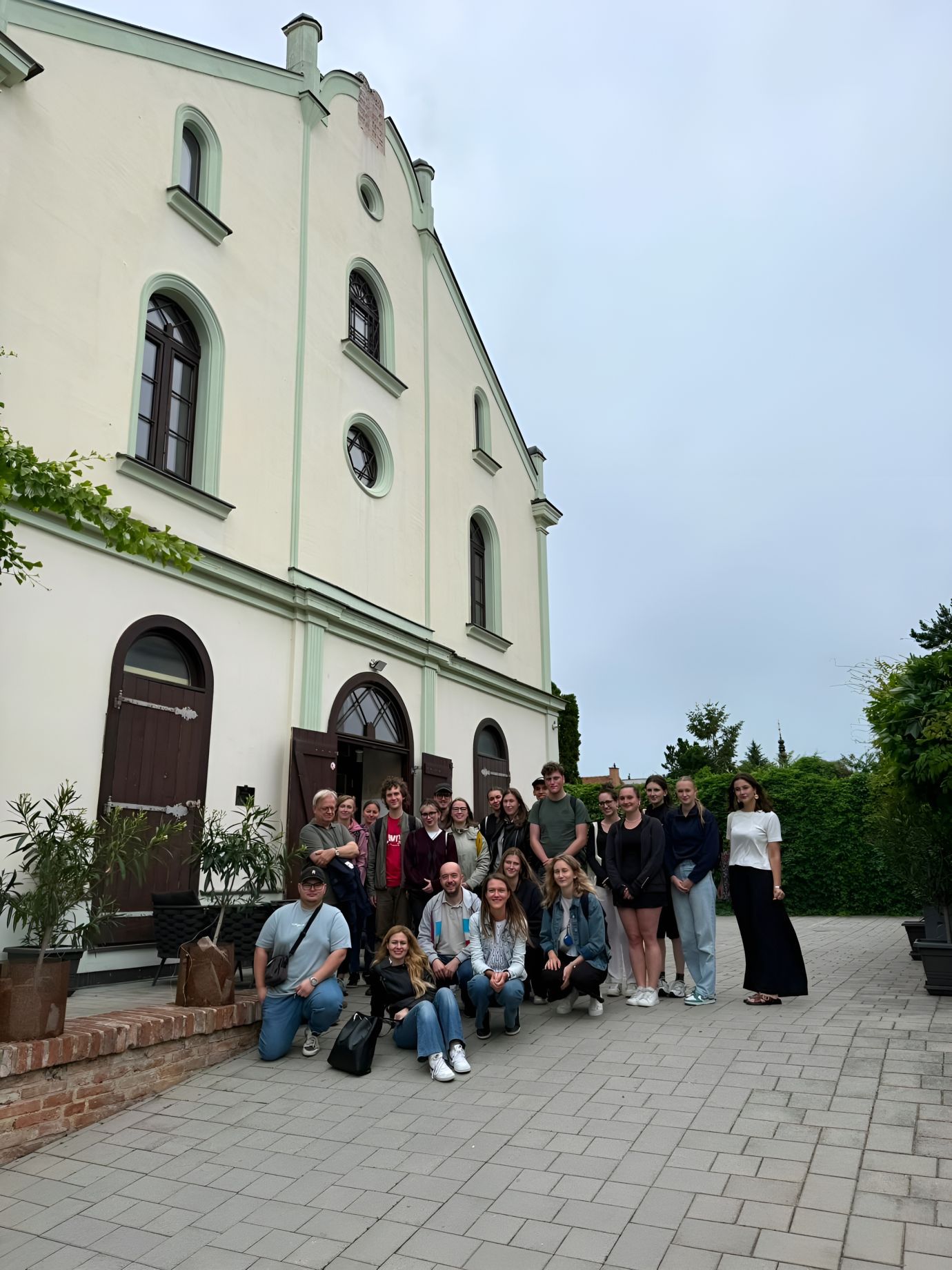
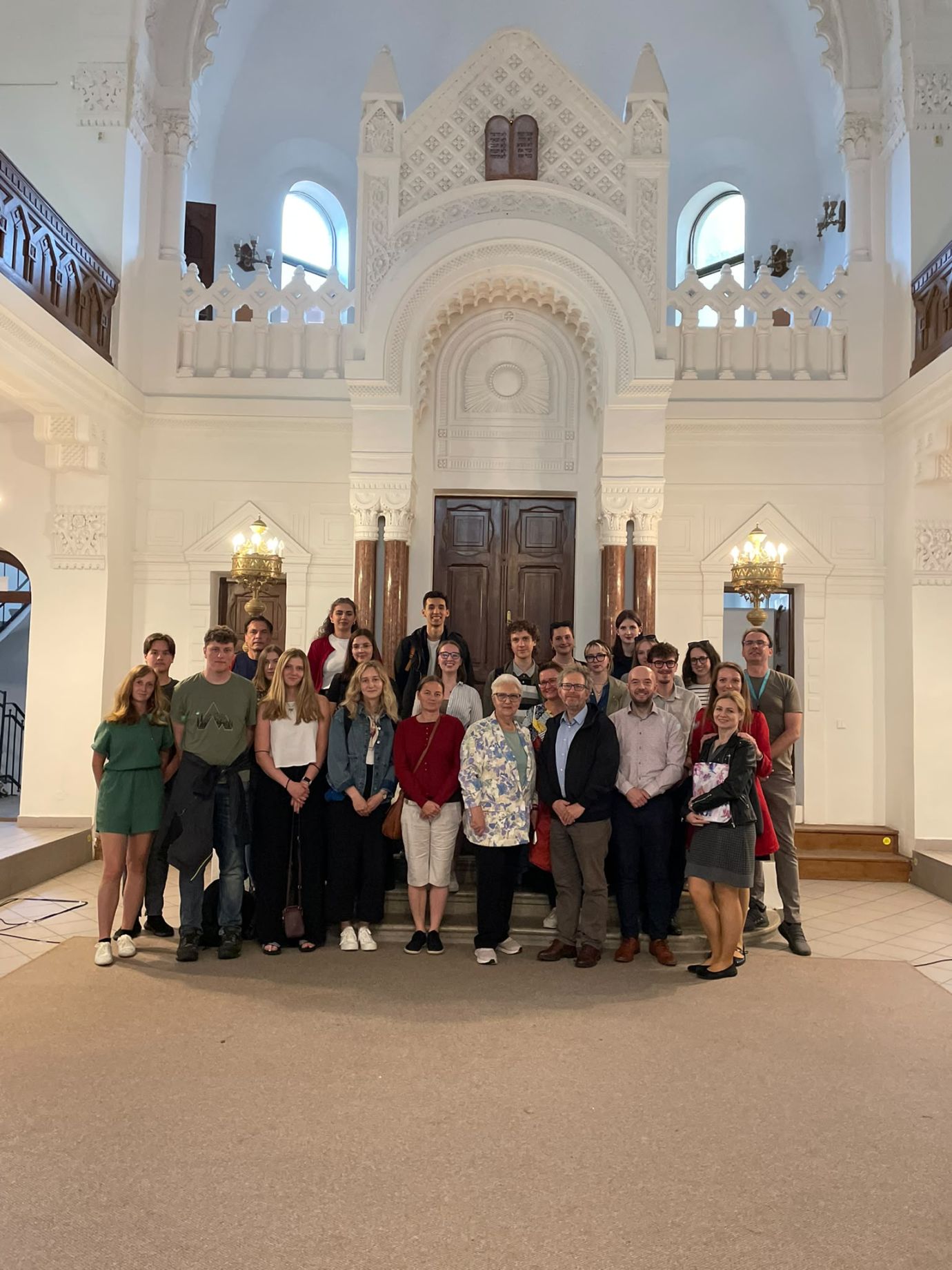
After the students got to know one another and were divided into four working groups, the first workshop took place. It focused on Jewish culture and religion and was led by PhDr. Monika Adamická, PhD., and Mgr. Michal Krauter, PhD. Following this activity, participants visited the Nitra Synagogue, where they were welcomed by Mgr. Katarína Potoková, a long-standing and prominent representative of the Jewish Religious Community in Nitra. Her lecture focused on the history and present-day situation of the Jewish minority in Nitra and its surroundings. She also introduced visitors to the synagogue’s exhibitions and historic interior. The intensive programme of the first day concluded with a joint dinner at the Hoffer – Zámocká koruna restaurant in Nitra.
The first Tuesday workshop, entitled Central European Jewry in Literary Sources, was led by three associate professors – Erik Gilk, Ján Gallik, and Zuzana Vargová. It was devoted to the interpretation of two literary works dealing with the Holocaust: Imre Kertész’s novel Fatelessness and Hana Bělohradská’s novella Without Beauty, Without a Collar.
The following workshop focused on significant Central European films portraying the persecution of the Jewish population during World War II. Under the guidance of Assoc. Prof. Mgr. art. Štefan Timko, PhD., and Mgr. Lukáš Jiskra, students worked in groups to create four engaging stage sketches inspired by the films Romeo, Juliet and Darkness, The Shop on Main Street, In Darkness, and Son of Saul.
Afterwards, students watched The Auschwitz Report (Správa), directed by Slovak filmmaker Peter Bebjak, accompanied by an introductory lecture by the renowned semiotician and literary scholar Prof. PhDr. Tibor Žilka, DrSc.
The final Tuesday workshop, entitled The Holocaust by Bullets in Soviet-Occupied Territories, was led by PhDr. Monika Adamická, PhD., and Mgr. Michal Krauter, PhD. Its aim was to teach students how to work with the oral history method.
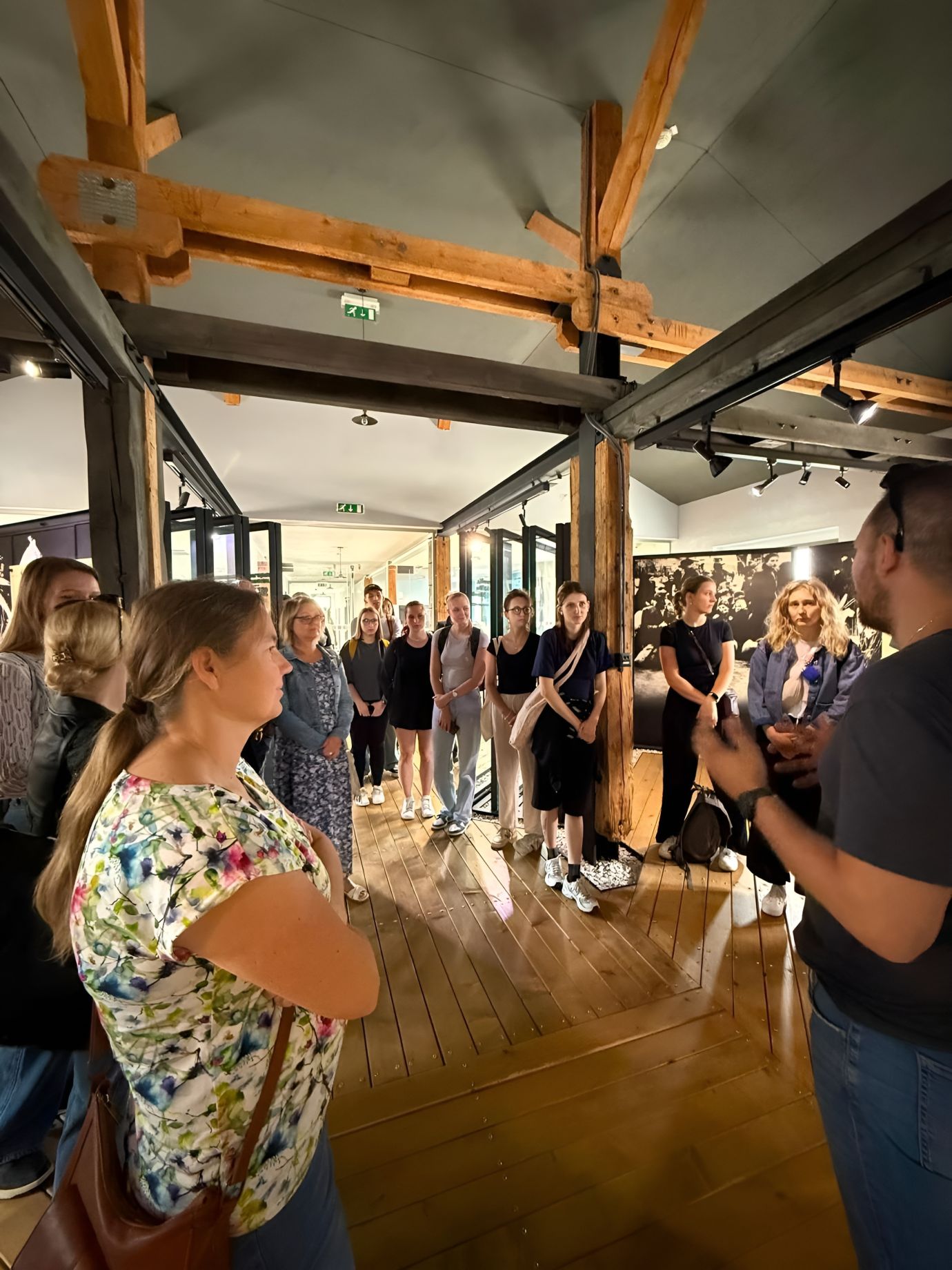
On Wednesday, 3 June, participants visited the Holocaust Museum in Sereď. The tour was guided by Slovak historian Mgr. Matej Beránek, PhD., who also prepared a workshop on working with Holocaust archival materials. In the afternoon, participants took part in a guided tour of the historic centre of Trnava, led by PhDr. Monika Adamická, PhD., with a special focus on monuments and sites connected to the Jewish community.
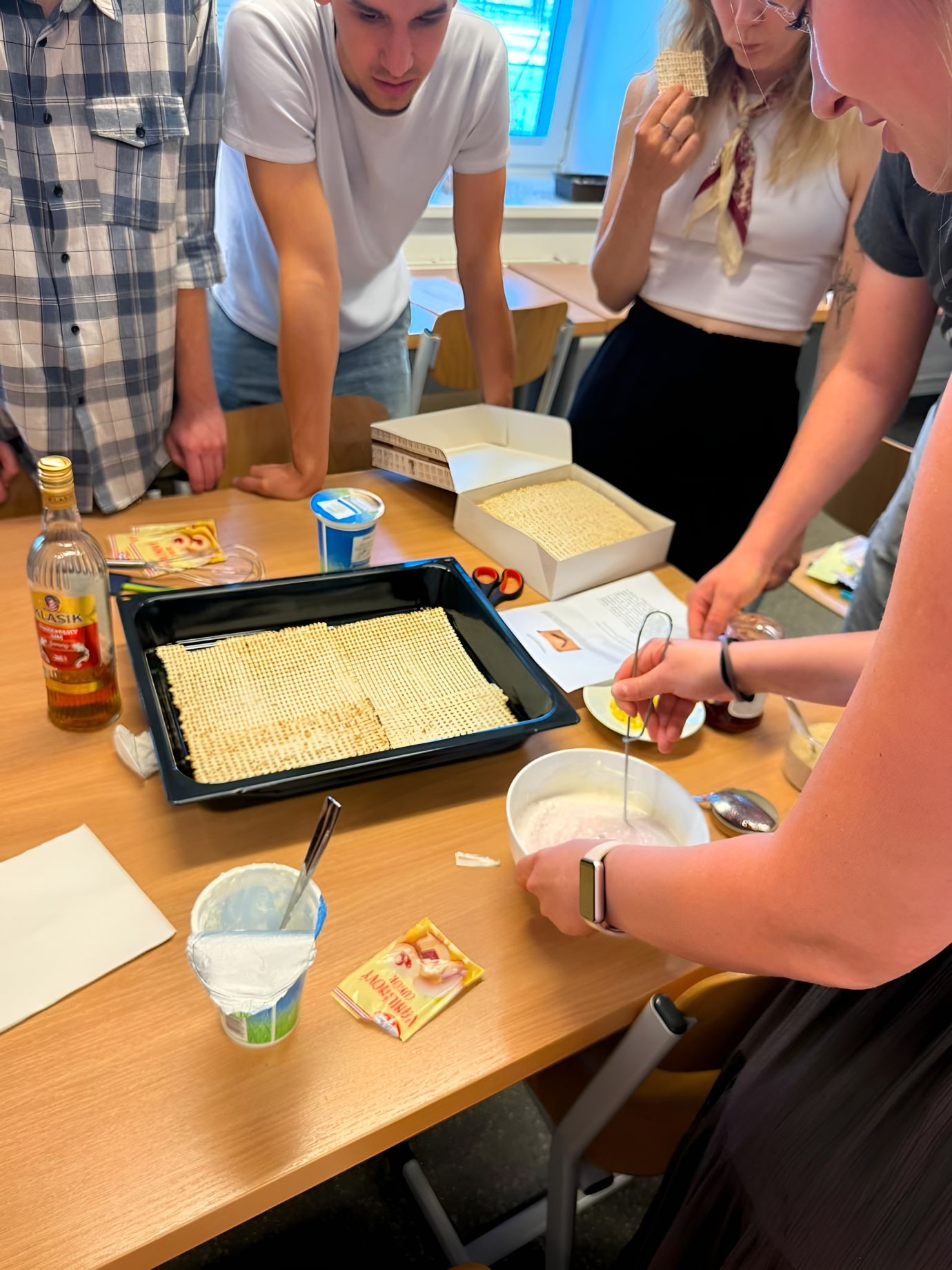
On Thursday morning, a culinary workshop was held at the Faculty of Central European Studies on Dražovská Street in Nitra. Participants prepared dishes associated with Jewish culture. The workshop was also attended by Mgr. Katarína Potoková, who introduced participants to popular regional Jewish dishes and their preparation.
In the afternoon, participants joined a guided tour of the historic centre of Nitra, led by faculty staff member and licensed tour guide Mgr. Hajnalka Budinszky, DiS. The tour concluded at Nitra Castle.
The final day was dedicated to presentations of the projects developed by students throughout the week. These included an innovative tourism project, a documentary film, a podcast, and a compelling multi-layered short story — all inspired by the central theme of the BIP, The Jewish Cultural Phenomenon in the Central European Context.
The programme concluded with a certificate-awarding ceremony, during which certificates were presented by the Vice-Dean for Education, PhDr. Monika Adamická, PhD., and the Vice-Dean for International Relations and Development, Mgr. Viktória Gergelyová, PhD.
Participants agreed that the week of intensive activities enriched them not only professionally but also personally. The programme provided a platform for knowledge exchange, collaborative learning, intercultural dialogue, critical thinking, and experiential education. In this way, Constantine the Philosopher University in Nitra contributed to fostering an open environment based on respect, mutual understanding, and appreciation among different cultural and social groups.
At the end of their stay in Slovakia, the international students completed an evaluation questionnaire regarding the Nitra Blended Intensive Programme. They particularly appreciated the commitment of all instructors, the diversity of activities, the warm and friendly atmosphere, and the active involvement of all students.
Among the participants’ comments were the following: “I would like to thank the organizing team for their work and care. I appreciate the excellent preparation and the welcoming attitude towards us students.”
Another participant wrote: “Thank you for the generous refreshments and the very kind approach – energetic, human, and authentic!”
At this point, we would like to express our sincere gratitude to all partner institutions for their active participation and professional contribution, to the leadership of Constantine the Philosopher University in Nitra for its continuous support in implementing the programme, and to the Erasmus+ institutional coordinator, Assoc. Prof. PhDr. Martina Pavlíková, PhD., MBA, for her professional assistance, methodological guidance, and administrative support.
We also confirm that the financial resources allocated for the implementation of the BIP were used effectively, transparently, and in accordance with the rules of the Erasmus+ programme.
Our thanks also go to all staff members, lecturers, and students who contributed to the successful organization and implementation of the programme. We believe that the contacts established, the knowledge gained, and the experiences shared will contribute to the further development of international cooperation and provide a solid foundation for future joint educational and research activities.
Authors: Assoc. Prof. Mgr. art. Štefan Timko, PhD., and Mgr. Viktória Gergelyová, PhD.
Photos: Archive of the Institute of Central European Languages and Cultures, Faculty of Central European Studies, Constantine the Philosopher University in Nitra.