

Two Years of Experience and Results: Preparing Future Teachers of Slovak Language for Hungarian-Medium Schools
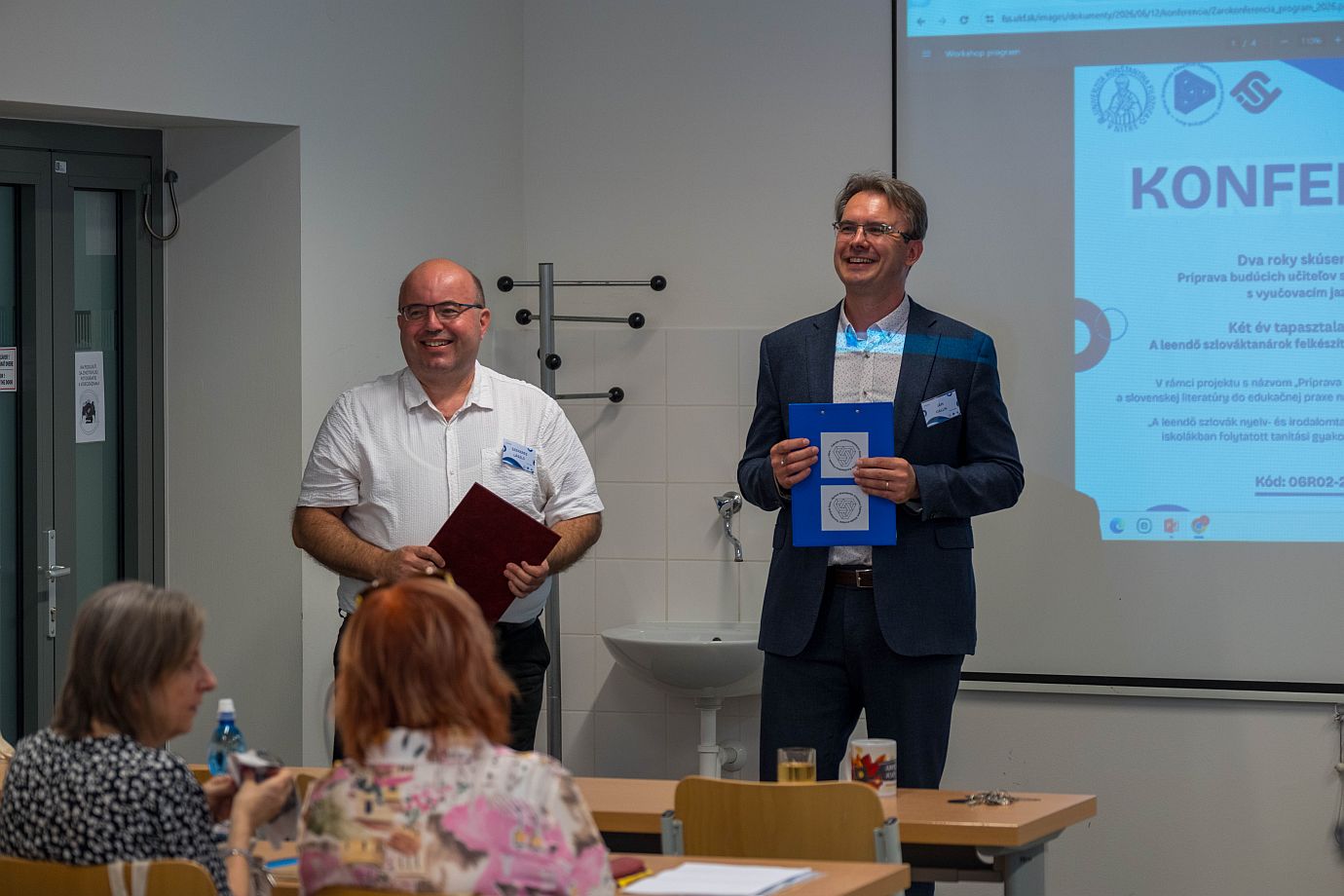
On 23 June 2026, the final conference of the project Preparation of Future Teachers of Slovak Language and Slovak Literature for Educational Practice in Schools with Hungarian as the Language of Instruction (project code 06R02-20-V01-00002, funded by the Recovery and Resilience Plan of the Slovak Republic), entitled Two Years of Experience and Results: Preparing Future Teachers of Slovak Language for Hungarian-Medium Schools, was held at the Faculty of Central European Studies of Constantine the Philosopher University in Nitra.
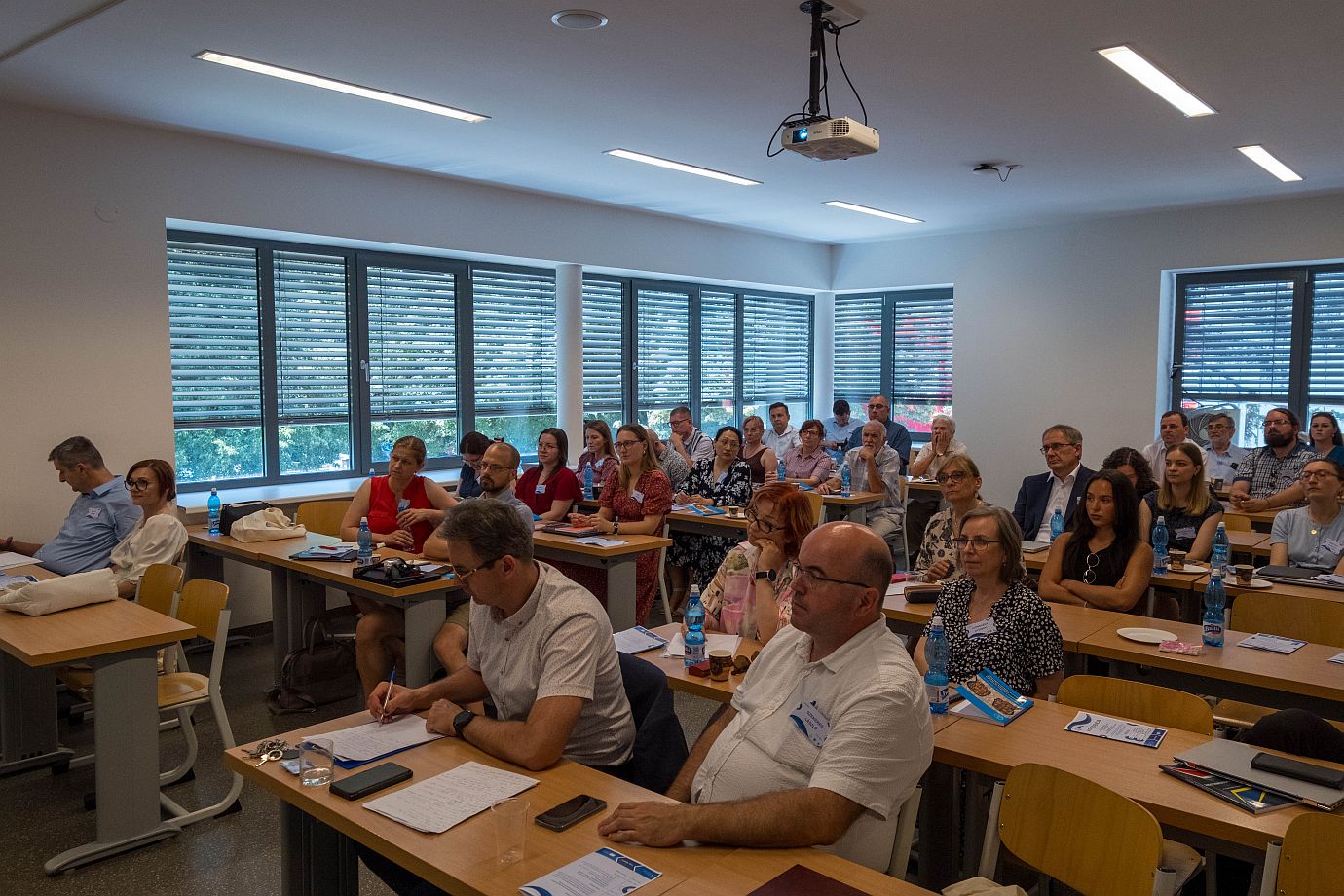
The event provided a space for presenting the results of the project, for professional reflection on the current state of the teaching of Slovak language and Slovak literature in Hungarian-medium schools, and also served as a meeting point for representatives of educational policy, academia, school practice and publishing practice.
The conference was attended by representatives of the Ministry of Education, Research, Development and Youth of the Slovak Republic, the National Institute of Education and Youth, J. Selye University in Komárno, Comenius University in Bratislava, the Ľudovít Štúr Institute of Linguistics of the Slovak Academy of Sciences, the project teams of Constantine the Philosopher University in Nitra, primary and secondary schools with Hungarian as the language of instruction, as well as representatives of the media and publishing practice. Invited guests included Kálmán Petőcz, Director General of the Section for National Minority and Inclusive Education at the Ministry of Education, Research, Development and Youth of the Slovak Republic; Dóra Kanyicska Belán, Director of the Department for the Development of National Minority Education; Martina Kokavecz Beďaťšová, Head of the Department of Higher Education Policies; Marcel Olšiak, Gyöngyi Ledneczky and Anita Halász from the National Institute of Education and Youth; as well as several experts from the university, school, media and publishing sectors.
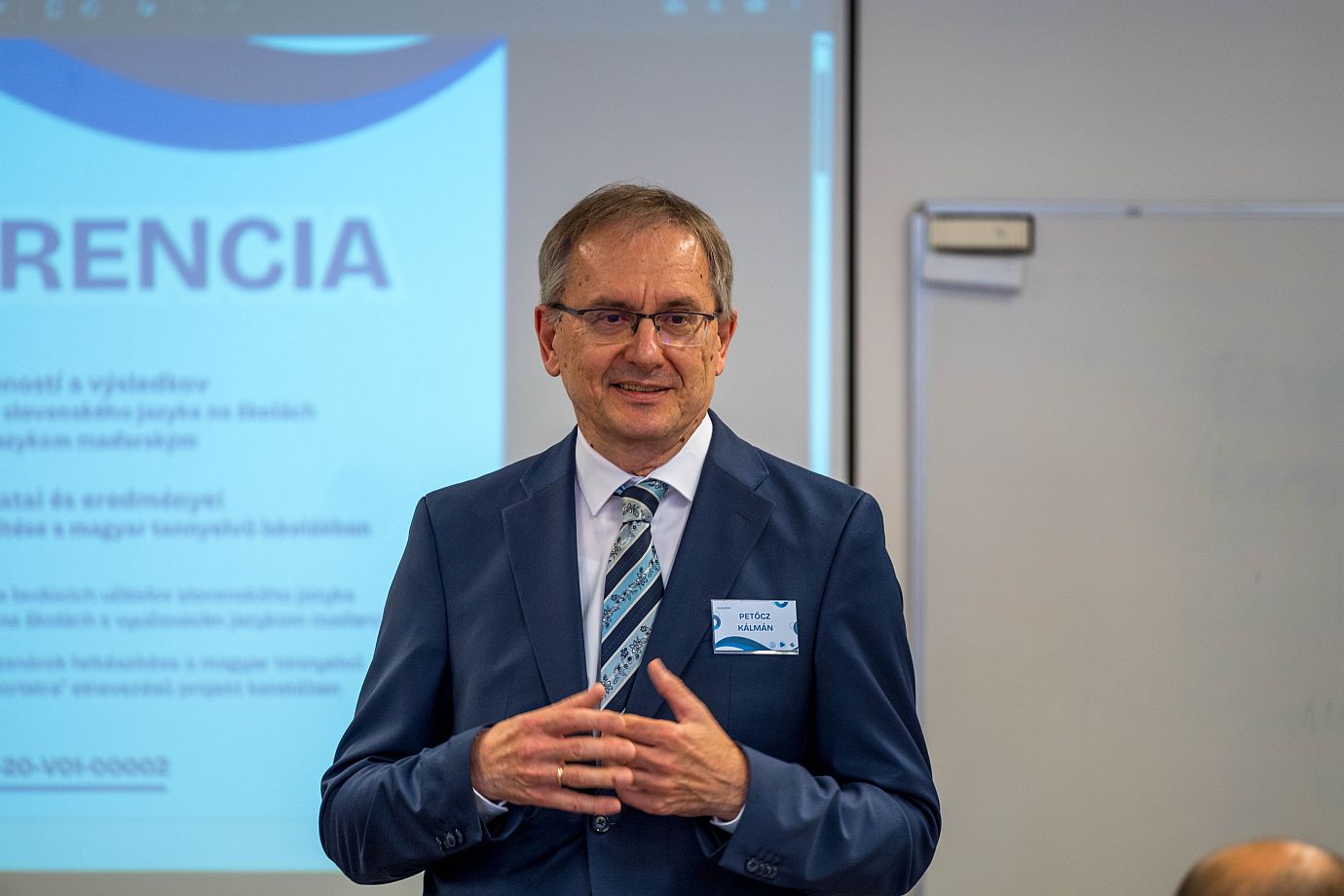
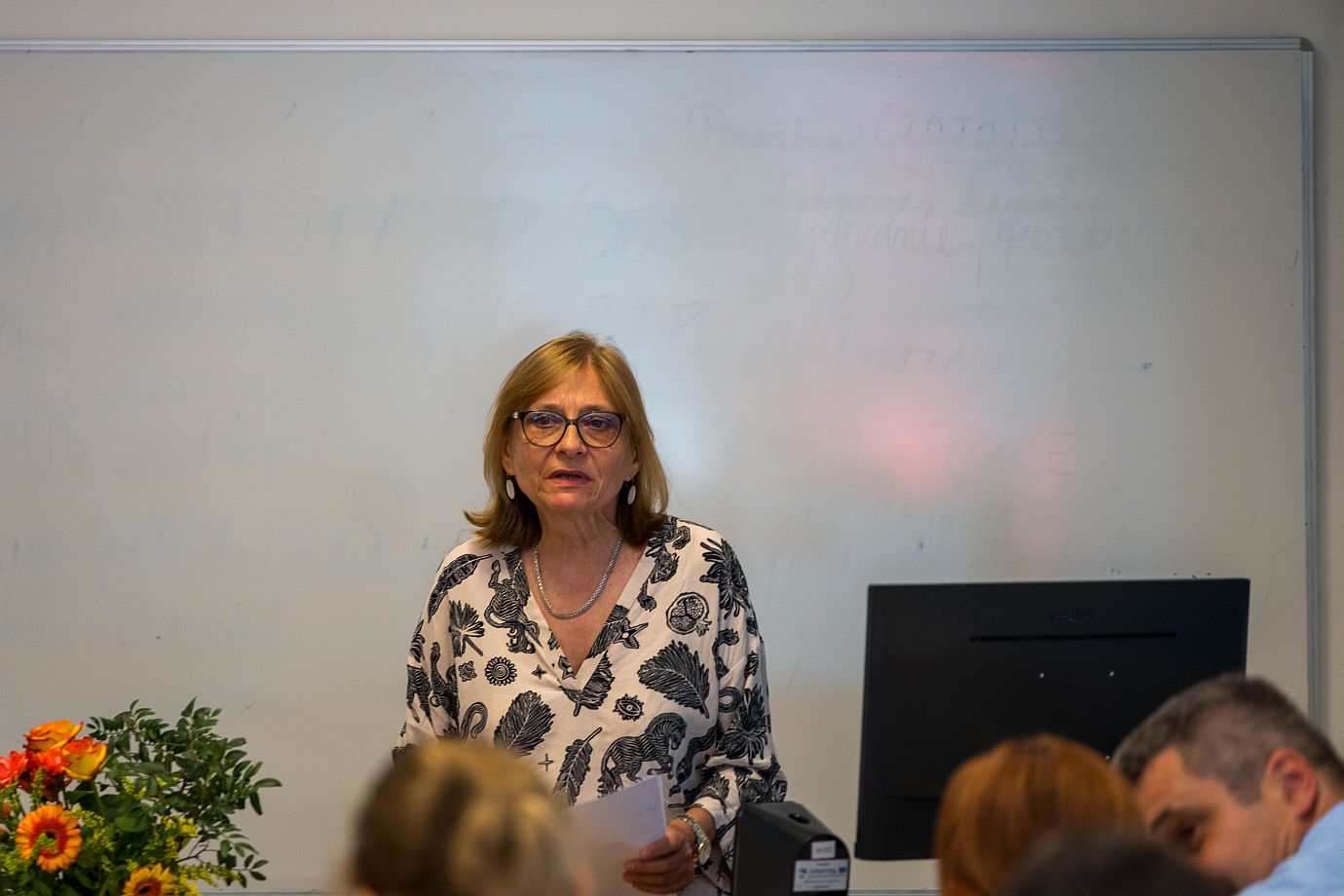
The event was moderated by Ján Gallik, Director of the Institute of Central European Languages and Cultures at the Faculty of Central European Studies of Constantine the Philosopher University in Nitra and a member of the project team. The participants were welcomed by Ladislav Szekeres, Dean of the Faculty of Central European Studies, and by Ildikó Vančo, the principal investigator of the project. The opening address was delivered by Kálmán Petőcz, who presented the broader context in which the project was launched and emphasised its importance for the further development of national minority education in Slovakia. He also stressed that building an inclusive society is closely linked to people’s relationship with the state in which they live and to their relationship with the state language.
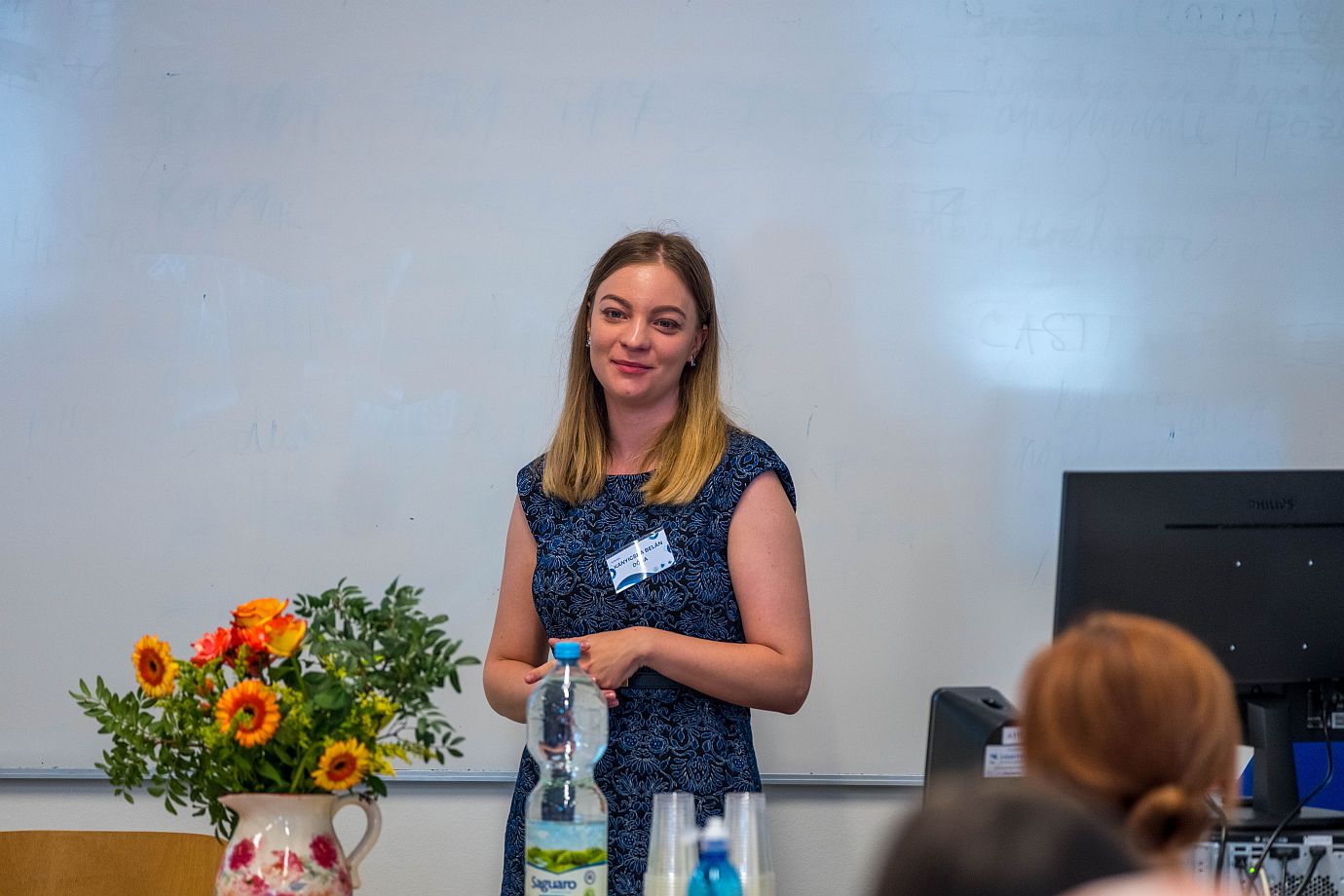
His presentation was followed by a presentation by Dóra Kanyicska Belán on the milestones in the teaching of Slovak language and Slovak literature in schools with the languages of national minorities as the languages of instruction. She presented the development of conceptual documents from the early 1990s, the creation of the first modern state educational programme in 2008, the results of the national project implemented between 2016 and 2020, and the importance of the new educational standards adopted in 2023. She emphasised the need to use proven strategies and methods for teaching Slovak as a second language and, at the same time, called for more intensive cooperation between higher education institutions and school practice, which can contribute to improving the quality of Slovak language teaching in Hungarian-medium schools.
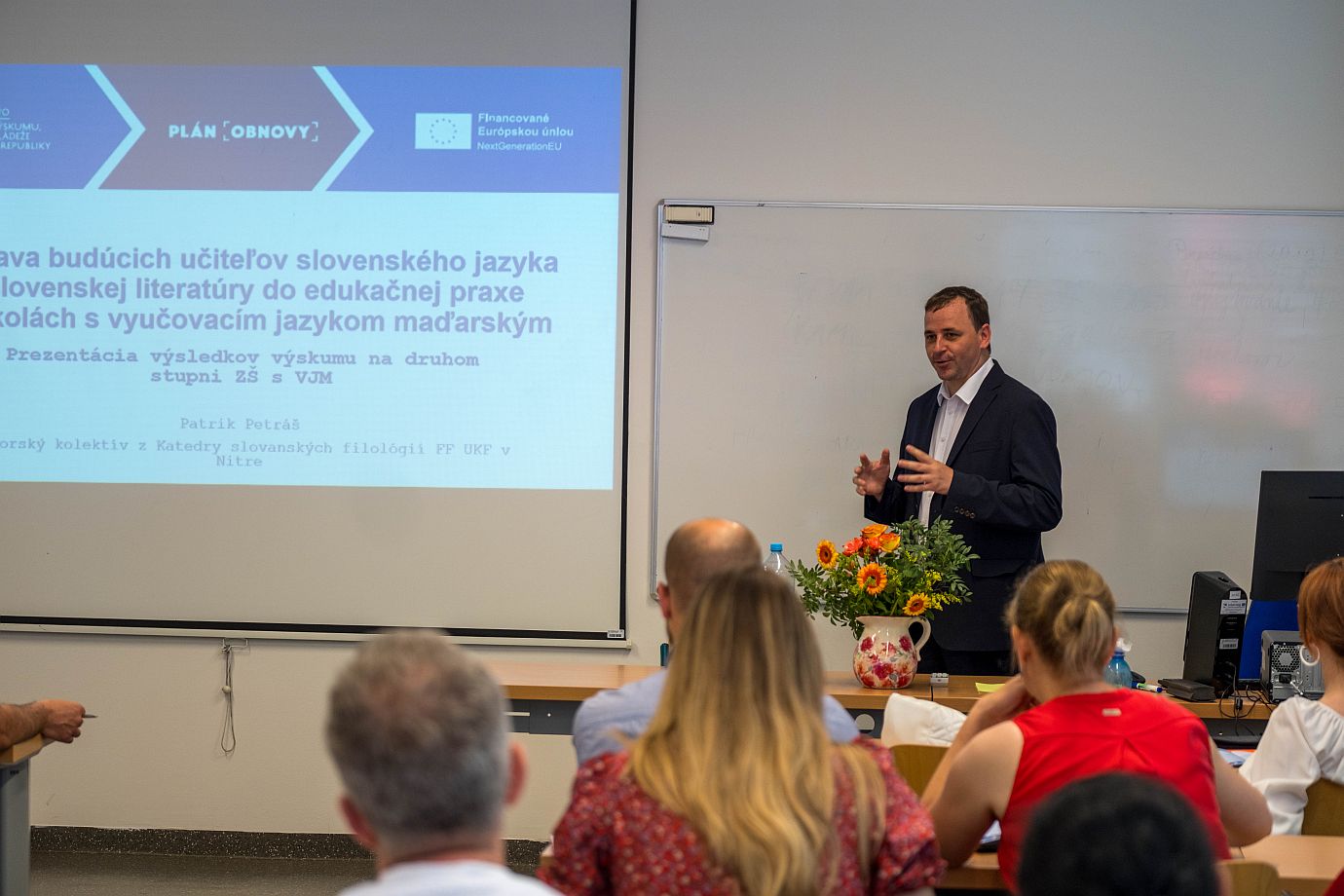
The aims, implementation and results of the project were presented by Ildikó Vančo on behalf of the team from the Faculty of Central European Studies and by Patrik Petráš on behalf of the team from the Faculty of Arts of Constantine the Philosopher University in Nitra. Over the course of two years, the project connected research, pedagogical, methodological, publishing and dissemination activities. An important part of the project consisted of extensive research carried out in Hungarian-medium schools throughout Slovakia. A total of 995 pupils participated in the questionnaire survey conducted at the first stage of primary schools, while a further study at the second stage of primary schools and in eight-year grammar schools included 472 respondents. The research activities were complemented by classroom observations, interviews with teachers, analyses of textbooks, the examination of pupils’ language productions, and the collection of experiences from future teachers.
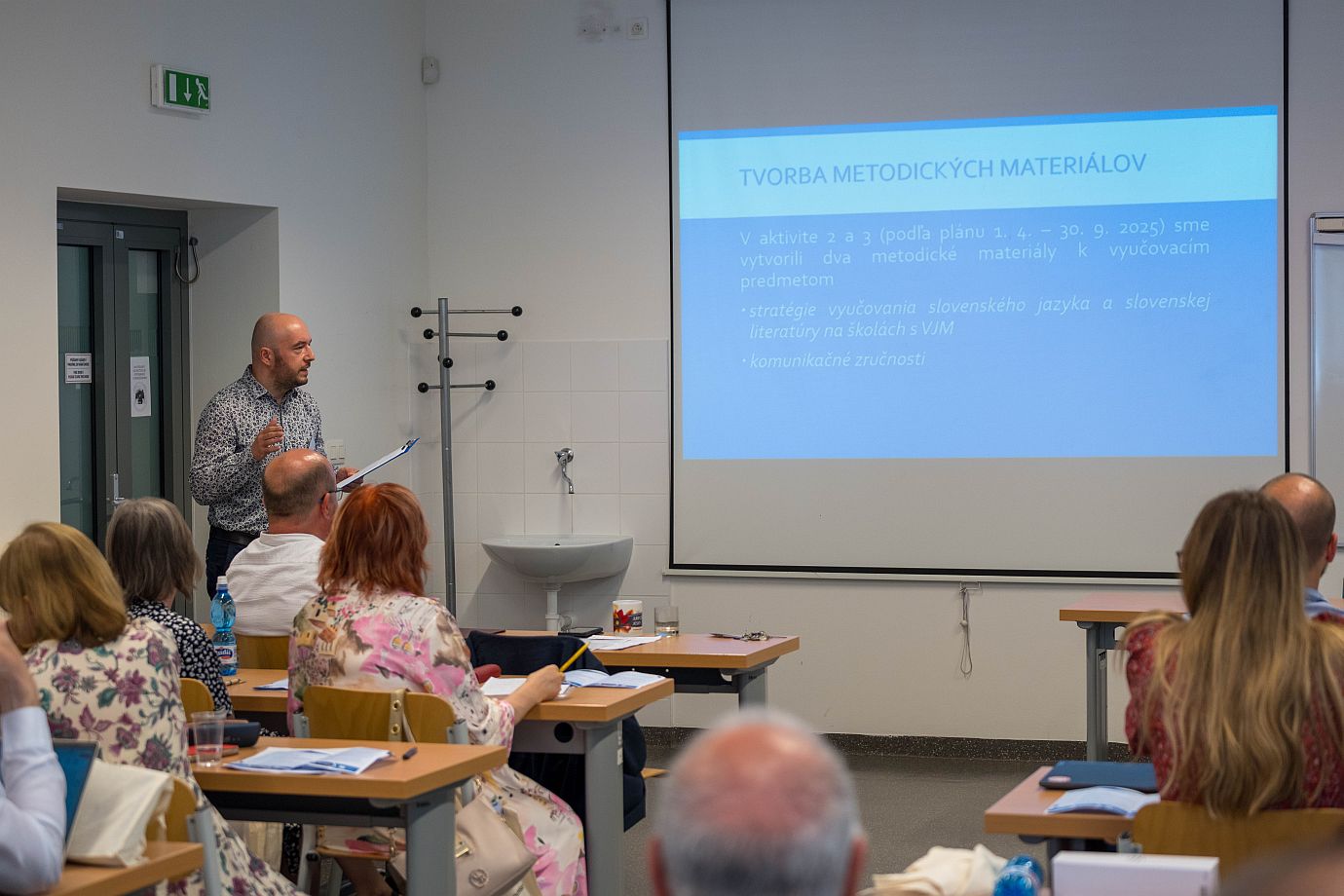
In the section devoted to further results achieved by the Faculty of Central European Studies of Constantine the Philosopher University in Nitra, Ján Gallik and Michal Krauter presented experiences from the development of methodological materials, an online textbook and the piloting of new courses aimed at preparing future teachers for Hungarian-medium schools. Special attention was paid to the courses Strategies for Teaching Slovak Language and Slovak Literature in Hungarian-Medium Schools and Communication Skills, which were tested in pedagogical practice during the 2025/2026 academic year. They also presented the forthcoming online textbook intended for student teachers, in which they highlighted the importance of non-verbal communication, experiential learning, and the connection of language education with movement-based and creative activities.
The next conference section focused on research results and new university textbooks. Ildikó Vančo and István Kozmács presented the results of an analysis of Slovak language productions by pupils at the first stage of Hungarian-medium primary schools. The research brought valuable findings on the level of vocabulary, sentence formation and the productive use of Slovak in different regions of Slovakia, and created a basis for further scholarly publications and methodological recommendations.
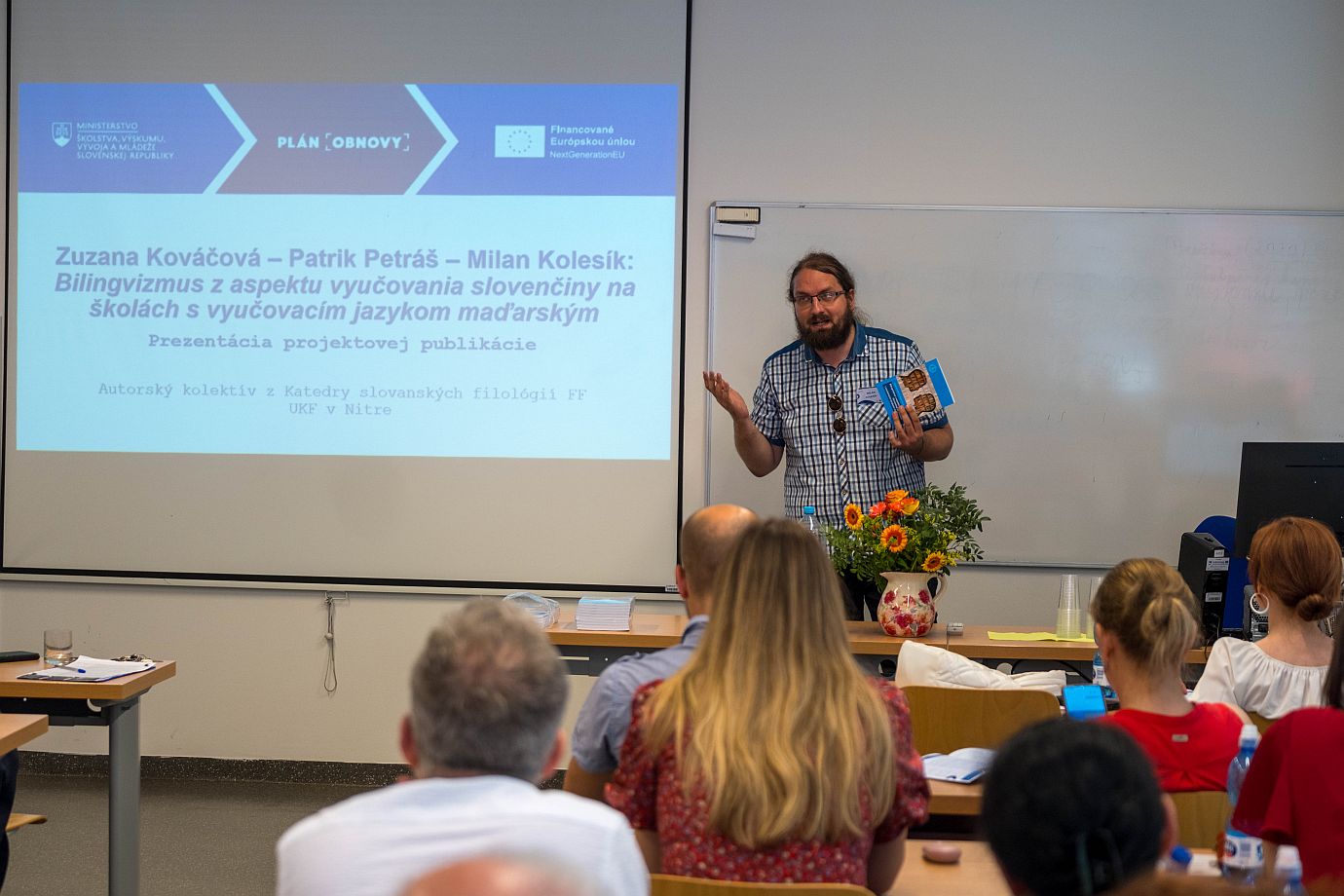
Milan Kolesík presented the university textbook Bilingualism from the Perspective of Teaching Slovak in Hungarian-Medium Schools, which was produced as one of the main scholarly outputs of the project. The publication offers future teachers theoretical knowledge about bilingualism, school bilingualism and language interference between Slovak and Hungarian, while also providing methodological starting points for teaching Slovak as a second language.
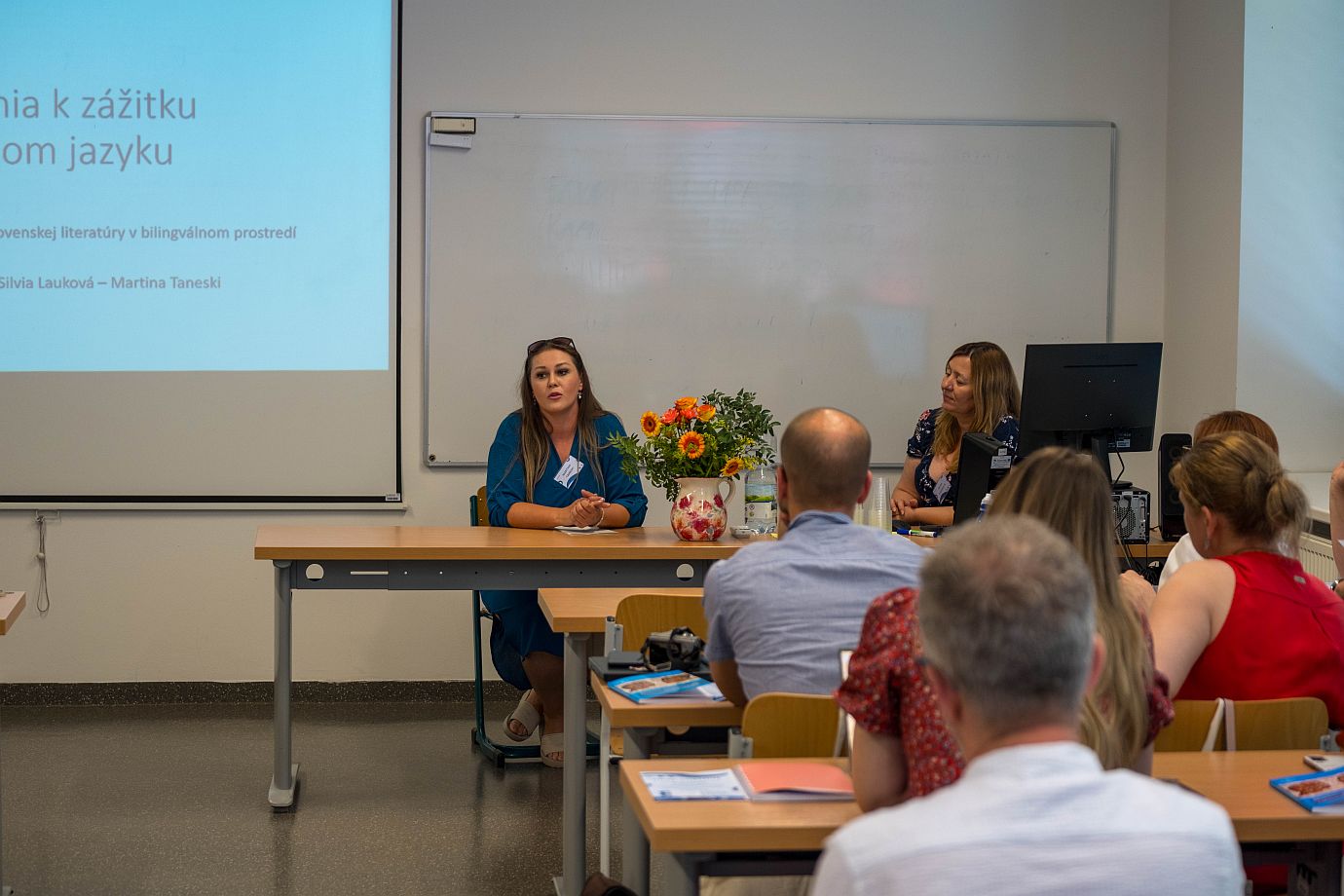
Silvia Lauková, Petra Kaizerová and Martina Taneski presented the forthcoming textbook From Reading to Experience in a Second Language: Didactic Aspects of Teaching Slovak Literature in a Bilingual Environment. The authors drew attention to pupils’ differing levels of language preparedness and to their often limited contact with Slovak outside the school environment. They emphasised the need to develop reading competences through experiential learning, text-based work and communication-oriented activities.
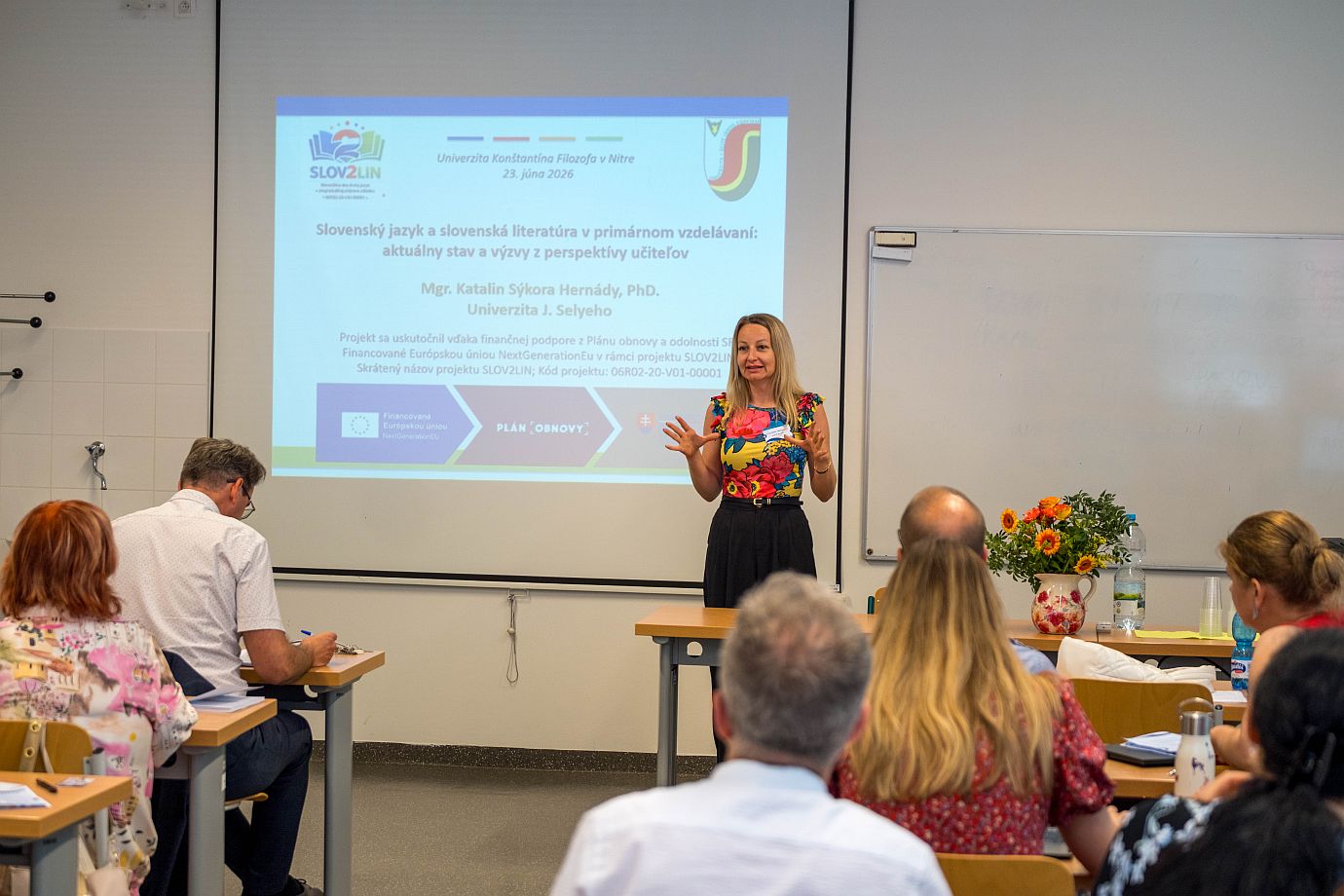
The final part of the professional programme belonged to Katalin Sýkora Hernády from J. Selye University in Komárno, who presented the results of research focused on the current state of the teaching of Slovak language and Slovak literature in primary education. She pointed to the continuing dominance of teacher-led instruction and to the need to create more space for pupils’ autonomous and reflective learning. She emphasised that the success of Slovak language acquisition depends not only on the didactic methods used, but also on the linguistic environment of the school and pupils’ everyday communicative practice.
An important part of the conference was a round-table discussion involving representatives of the ministry, higher education institutions, research institutes, the school environment and the publishing house Skabela, s.r.o. The discussion focused on the systemic changes needed to further improve the preparation of future teachers of Slovak language for Hungarian-medium schools, on possibilities for more effectively linking research results with pedagogical practice, and on the future form of teaching Slovak as a second language. The participants agreed that important conditions for success include long-term support for teachers, the systematic use of modern methodological materials, the development of pupils’ communicative competences, and more intensive cooperation between higher education institutions, research institutes and regional schools.
The conference confirmed that the project Preparing Future Teachers of Slovak Language and Slovak Literature for Educational Practice in Hungarian-Medium Schools produced not only extensive research results, new university textbooks, methodological materials and piloted courses, but also created a unique space for professional dialogue on the future of Slovak language teaching in a bilingual environment. The project outputs represent a significant contribution to the further development of Slovak as a second language and to the preparation of future teachers for Hungarian-medium schools.
Authors of the text: doc. PhDr. Ján Gallik, PhD. – prof. Dr. habil. Ildikó Vančo, PhD.
Photographs: Mgr. Tibor Szabó, PhD.