

Between practice and discourse
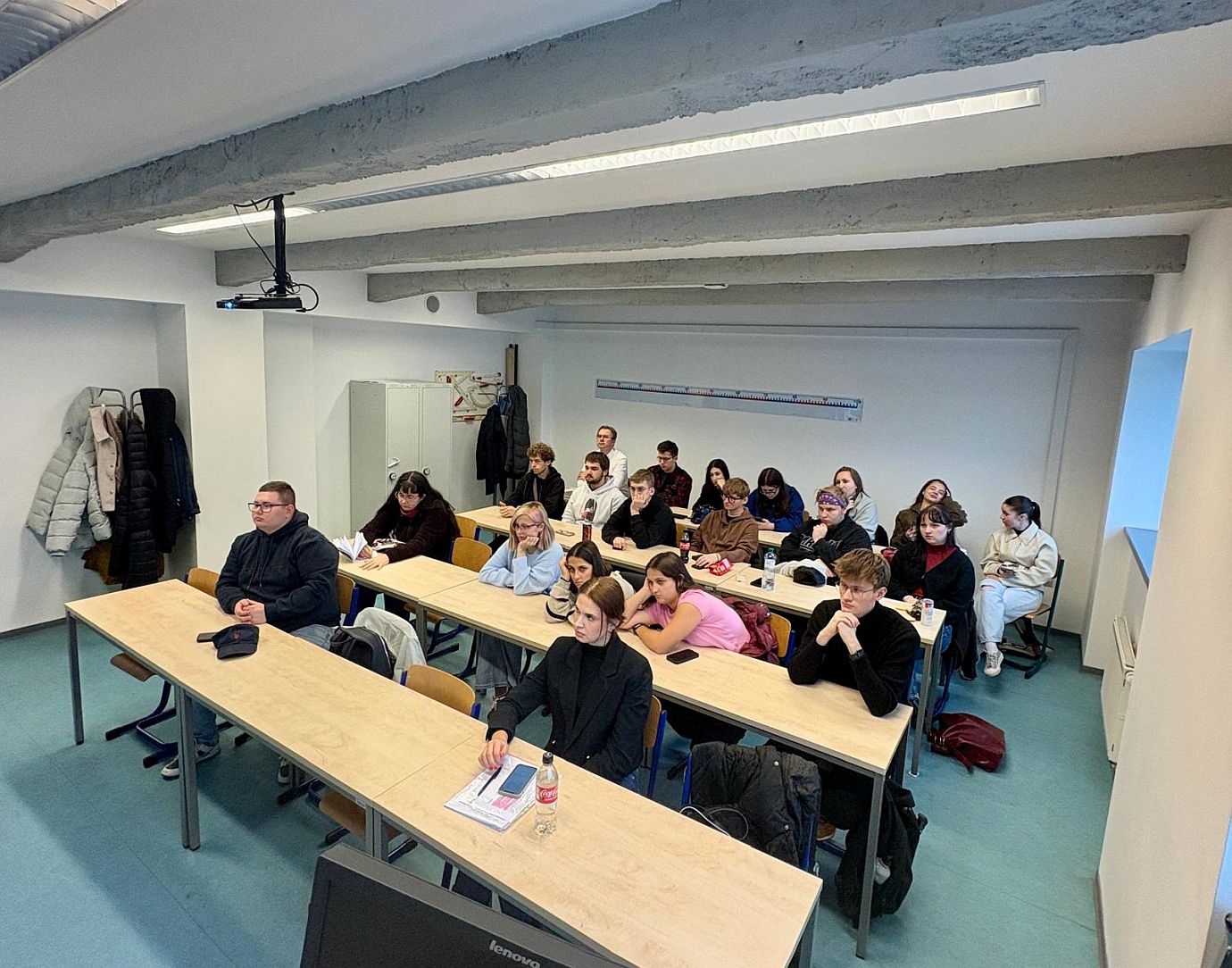
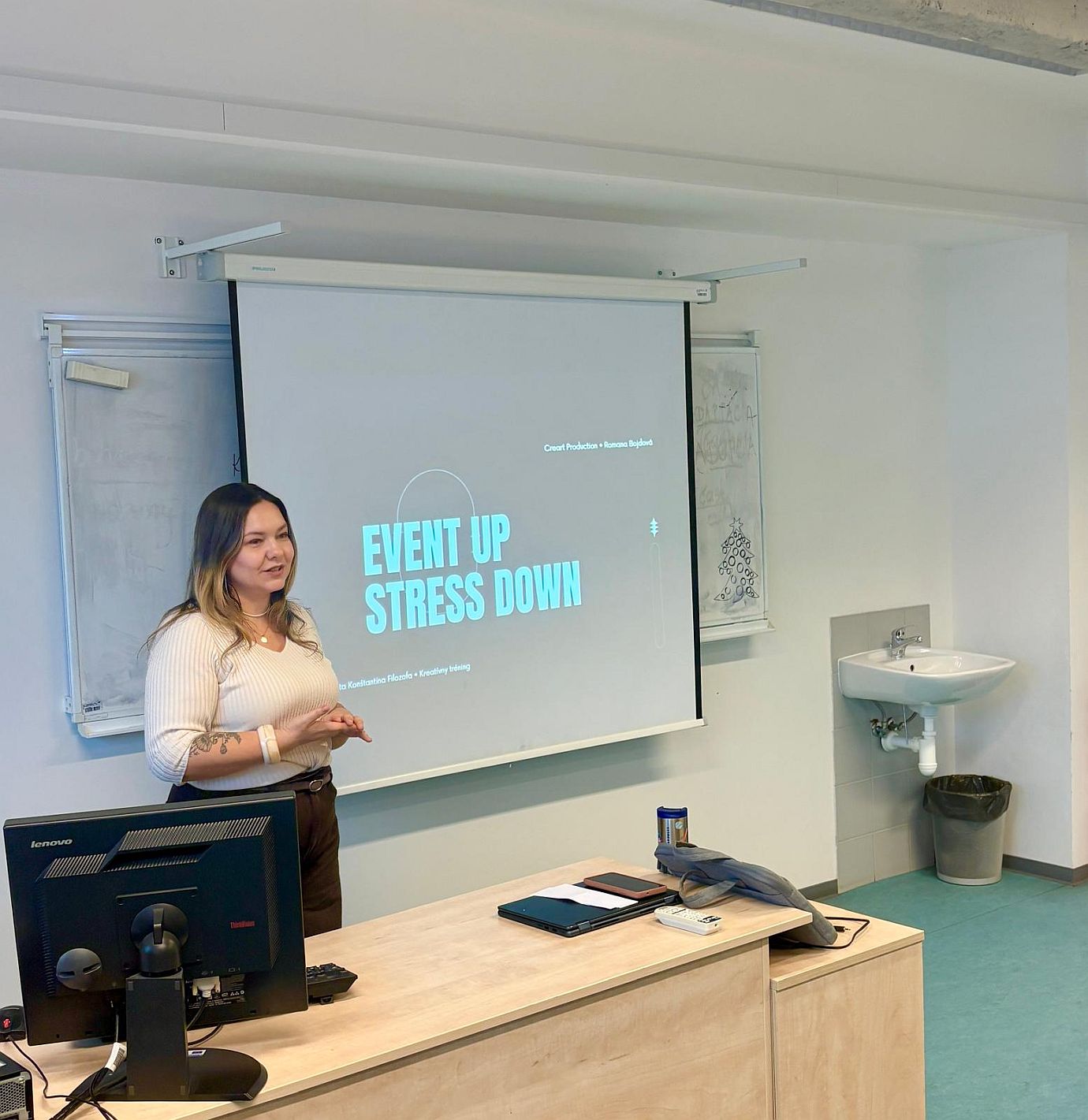
The 25th year of the Student Day at Nitra Universities, held on 10th November 2026, featured an interesting lecture by Mgr. Romana Bojdová, manager of an events agency, titled ‘Event Up, Stress Down’. The lecture was organised by Mgr. Dominika Hlavinová Tekeliová, PhD., from the Institute of Central European Languages and Cultures at the Faculty of Central European Studies, CPU in Nitra. The lecture, aimed at students of Central European Areal Studies and the wider public, explained how an event is organised and what to bear in mind at each stage of its preparation and implementation. Romana Bojdová also shared her practical experience and recounted several curious situations that arise when organising events. When discussing the various stages of organising an event, the lecturer highlighted several important aspects – beware of unrealistic expectations regarding both resources and the team; the accessibility of the venue and parking spaces is important, as is the availability and sufficiency of electricity. Power cuts are a common problem during events. It is important to take the performer’s conditions into account. Their technical requirements can even double the cost. It is important that the information is correct. If an influencer promotes an event and their video receives many views but lists the wrong date and time, it may do more harm than good. Attention should be paid to the fatigue and energy levels of the organising team, including volunteers, and if the event is to be repeated, it is a good idea to promote it straight after it has finished.
The event also included a creative team activity, during which the students had a go at coming up with a concept and organising their own festival. Their ideas centred on coffee, music, making friends with international students, a varied entertainment programme for young people, and discovering ways to be active every day. The coffee festival was given the evocative title ‘From Bean to Cup of Coffee’, whilst the exercise festival would be called ‘Discover Movement’. Several students immediately volunteered to join the various fields required for the potential organising teams.
The lecture offered students a behind-the-scenes look at event organisation, practical experience of the events industry, and the opportunity to put their own organisational and creative skills to the test.
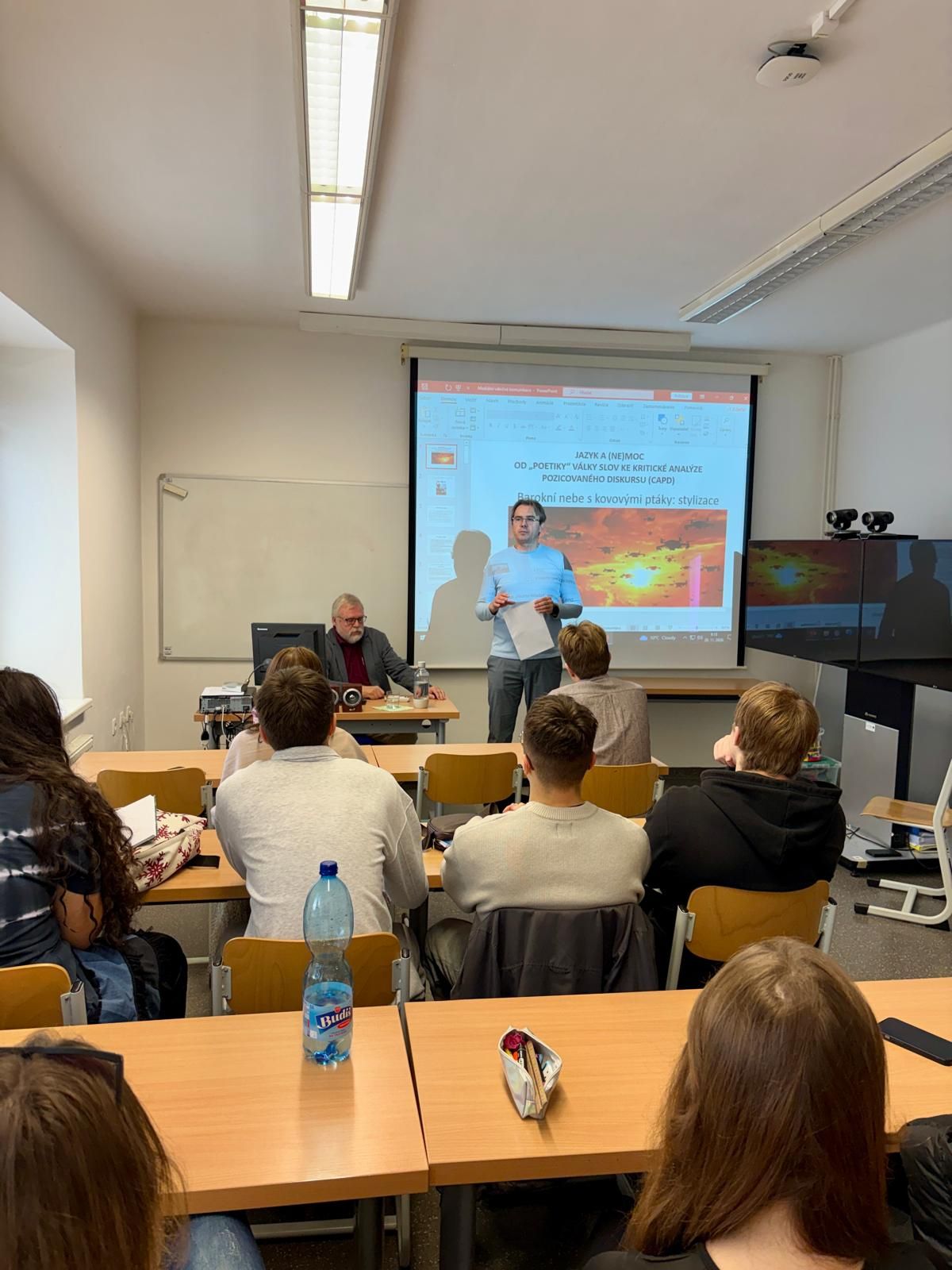
On 20th November 2026, as part of the Science and Technology Week, a lecture by PaedDr. et PhDr. Alexej Mikulášek, PhD., titled ‘Jazyk a ne(moc)’ was held at the Faculty of Central European Studies, CPU in Nitra; it was introduced by doc. PhDr. Ján Gallik, PhD. The lecture focused on the interconnections among language, communication, and power, paying particular attention to the ‘us and them’ dichotomy, the formation of collective identity, and the influence of linguistic and visual means on perceptions of war conflicts.
In the introductory part of his lecture, Alexej Mikulášek presented the historical discourse on war in selected countries, specifically Germany, Japan, the United States of America, and the Soviet Union. Using propaganda posters, he highlighted the use of linguistic and visual devices to influence public opinion and shape the enemy's image.
The second part of the lecture focused on the significance of words and their ability to influence the interpretation of events, particularly through euphemisms and dramatizing expressions. In the context of the Russo-Ukrainian war conflict, the lecturer also presented visual examples, including the painting ‘Madonna Kalashnikov’ (2012) by the American artist Chris Shaw. Its digital version gradually spread across the internet and gained popularity in Ukraine too, where it began to be associated with the symbolism of the country’s defence. Later, a modified version called ‘Saint Javelin’ was created, in which the Madonna holds a Javelin anti-tank missile instead of a Kalashnikov. Following the start of the Russian invasion in 2022, this image became a viral symbol of Ukrainian resistance.
The third part of the lecture dealt with fictional news reports, such as those concerning the targeting of a school and a children’s playground. Using this example, the lecturer highlighted how the same event can be described and interpreted in different ways depending on the linguistic devices employed. He also focused on the creation of an ‘us and them’ dichotomy, which influences perceptions of events, divides society, and shapes public attitudes.
The final section focused on megatrends in the linguistic representation of war and shifts in the meaning of concepts such as peace, defence, freedom, service and the fight against terrorism. The speaker pointed out that the meaning of these terms varies with the social and political context.
The lecture also included the presentation of a book titled ‘Us and Them in the Informative War’, written by Alexej Mikulášek. The book was published in 2025. The lecture offered a thought-provoking perspective on language as a tool for communication, persuasion and the shaping of social consciousness, and emphasised the importance of a critical approach to linguistic and visual messages in today’s information landscape.
The autumn series of lectures at the Faculty of Central European Studies, CPU in Nitra, successfully bridged the gap between the world of practical event management and a deeper reflection on language and power. Students took away from both sessions not only valuable practical inspiration, but also food for thought on how to view communication in today39s society from a critical perspective.
Authors of the article: Mgr. Hana Horváthová – Bc. Rebeka Leila Stercel (ICELC)
Foto: archive of ICELC